Development Theories
Major Developmental Theoriests in Educational Psychology
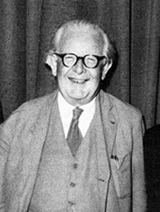 |
Jean Piaget
Piaget's theory
centers on the idea that children are active and motivated learners.
He advocated what is known as "cognitive constructivism,"
meaning that students create their own meaning through interaction with
the environment. He theorized that learning occurs through a process
of assimilation and accommodation as students continually seek for equilibrium.
However, he also hypothesized that cognitive development can only occur
as cognitive maturation is achieved. His four stages of development
are:
- Sensorimotor
- Preoperational
- Concrete operations
- Formal operations
Related Websites:
|
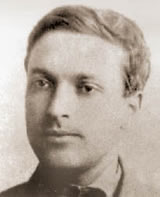 |
Lev Vygotsky
Vygotsky believed that learning
is a social process, hence his theory is referred to as "social
constructivism." He believed that language, particularly self-talk
and inner speech, plays a major role in learning. Major applications
of Vygotsky's theory to education include the Zone of Proximal Development,
scaffolding, guided participation, apprenticeship, and peer interaction.
Relates websites:
|
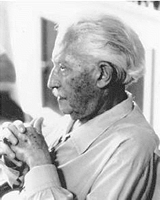 |
Erik Erikson
Erikson's theory asserted
that everyone experiences a series of "psychosocial crises"
as they mature. In other words, everyone has certain emotional hurdles
to overcome. How they overcome those hurdles can affect their personal
development. The stages of Erikson's theory are:
- Trust v. mistrust
- Autonomy v. doubt
- Initiative v. guilt
- Industry v. inferiority
- Identity v. role confusion
- Intimacy v. isolation
- Generativity v. stagnation
- Integrity v. despair
Related Websites:
|
 |
Lawrence Kohlberg
Kohlberg's theory takes aim
at the development of moral reasoning. In other words, how do children
think about moral situations? He advocated teaching moral reasoning
through the presentation of moral dilemmas. His stages are as follows:
Level 1: Preconventional
morality
- Stage 1: Punishment-avoidance
and obedience
- Stage 2: Exchange of favors
Level 2: Conventional
morality
- Stage 3: Good boy/good
girl
- Stage 4: Law and order
Level 3: Postconventional
morality
- Stage 5: Social contract
- Stage 6: Universal ethical
principle
Related Websites:
|
Thought Questions
-
What are the main assumptions
and principles of Piaget's and Vygotsky's theories of development?
-
What is similar and different
about these theories?
-
Can you think of any personal
observations or experiences that support or illustrate principles
advocated by these theorists?
-
Which stages of Erickson's
theory of psychosocial development apply to children you are likely
to be teaching?
-
What ideas does Erickson's
theory suggest that may help you support the social development of
children during their elementary years?
-
How might you use Kohlberg's
ideas about moral development to help students grow in their moral
reasoning?
 |
Books on Learning
e-Learning
|

 Teaching and Learning