|
Home  Teaching and Learning Educational Psychology > Theories of Motivation Teaching and Learning Educational Psychology > Theories of Motivation |
 |
Related Links |
Theories of Motivation
There are many different theories of motivation. In Educational Psychology, we focus specifically on motivation for learning rather than for behavior. The major types of motivation for learning are intrinsic and extrinsic.
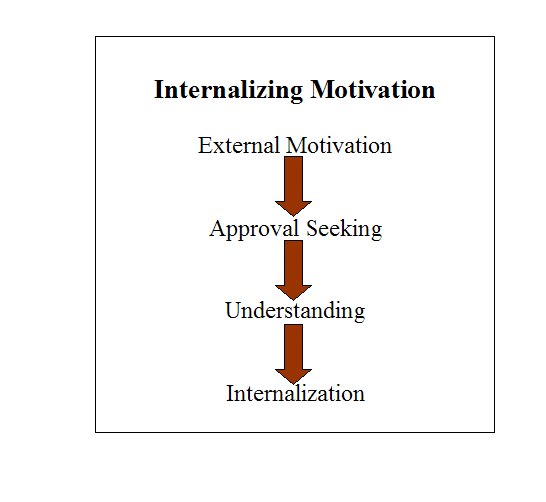
Extrinsic motivation comes from sources external to the student and the task. It can come through praise, recognition, or a system of rewards. For example, for students who do not enjoy reading, a token economy involving stickers or a class store may prompt them to read more often. As teachers, we hope to promote intrinsic motivation in our students as it encourages life-long learning. It is difficult to encourage intrinsic motivation all of the time, however, especially because we spend over 900 hours per year in the classroom. Some strategies for promoting intrinsic motivation include arousing interest in the subject matter, maintaining curiosity, using a variety of interesting presentation modes, and helping students set their own goals. A number of other strategies such as student choice, demonstrating the relevance or usefulness of content, and collaboration can also help encourage intrinsic motivation. We will sometimes need to use extrinsic motivators, as well. Be sure to use them only when the task is uninteresting to students, and make sure that the motivators are contingent on performance and recognize competence. Extrinsic motivators can also help to develop intrinsic motivation.
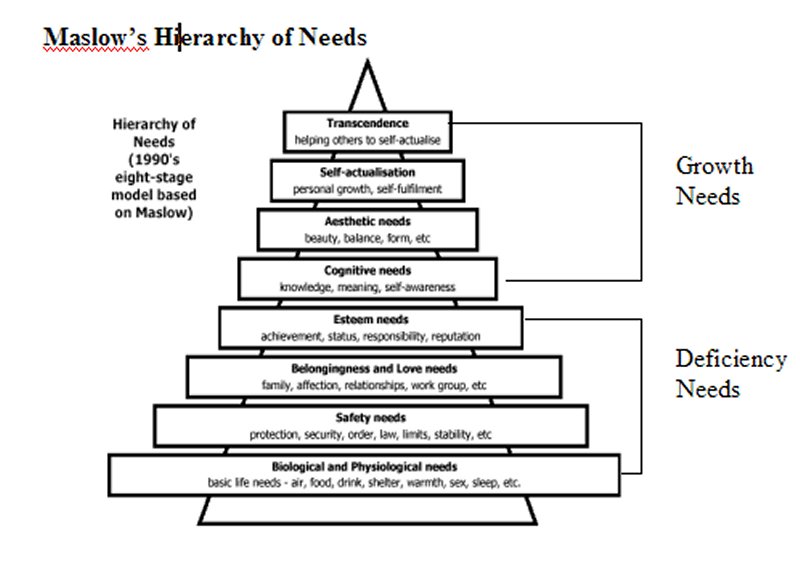
Maslow's Heirarchy of Needs is another important perspective of motivation. It states that each person has basic needs (such as food, shelter, love, etc.) that must be met before learning can occur. The number of levels in the heirarchy can be debated, but the following seems to be quite thorough:
Click on the hierarchy to view a larger version. Theories of Motivation Literature Review
Theories of Motivation WebsitesThe Psi Cafe Personality Theories Maslow Links Heirarchy of Needs Psychology History ARCS Ed Psych Interactive
 |
|
© 2011 Richard Culatta
 Intrinsic
motivation comes from within the student or from factors inherent
in the task being performed. For example, students who love to read
are intrinsically motivated to read - there is something about reading
that they enjoy and that makes them want to do it even if there is
no "reward" for it.
Intrinsic
motivation comes from within the student or from factors inherent
in the task being performed. For example, students who love to read
are intrinsically motivated to read - there is something about reading
that they enjoy and that makes them want to do it even if there is
no "reward" for it.