|
|
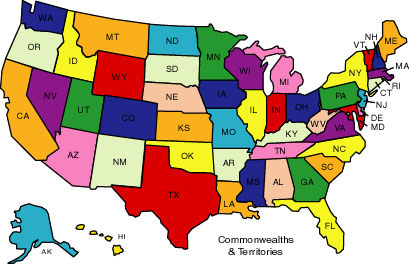
Context-Dependent Item SetsThe original version of the exercise is followed by the problems with it and a possible corrected version. Note that there are many ways in which the exercise might be corrected. The corrections here are not necessarily the best or most creative. See what you can come up with! Use the map below to answer the following questions:
1. What is the capital of Oregon? a. Portland 2. Which is the largest state in the United States of America? 3. Which state has the highest population? Problems: 1. Students do not need to use the map to answer the questions. Possible Correction: Use the chart provided below to answer the following questions: Growth Rate for the United States
1. Rank the states in order from highest population to lowest population in the year 2000: _____ Alabama 2. Which state experienced the largest increase in population between 1990 and 2000? 3. Which state experienced the greatest decrease in population between 1990 and 2000? The next step is to practice writing your own context-dependent item
set. Continue with the subject matter you chose earlier. What objective(s)
might be conducive to this type of exercise? Create one context-dependent
item set (at least two questions based on a display) on that content.
Compare your exercise with the guidelines to make sure that you have created
a quality item. |
||||||||||||||||||||||||||||||||||||||||||||||||||
  |
|||||||||||||||||||||||||||||||||||||||||||||||||||