|
|
Multiple Choice QuestionsWriting DistractersOne of the keys to writing good multiple choice questions is to include distracters (incorrect answer options) that are actually plausible and make your students think. This is harder to do than you might realize. The following information should help you to write better, more meaningful distracters. The distracters in a multiple-choice item are typically presented in the form of text or graphics:
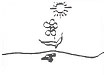
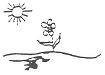
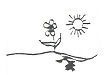
Note the following example from a 2nd grade science test: Which of these pictures shows the sun in the right position to cast the shadow shown at the base of the flower?
Generally, the correct answer and each option should be similar in form and structure. However, the most important requirement is that each of them should be a plausible answer to the problem posed in the stem. The quality of the distracters is more important than the quantity. Textbooks on test-item writing have traditionally stressed the need to include at least three distracters, but recent research indicates that two functional distracters is sufficient. It is not necessary to have the same number of distracters for every item in a test. Writing distracters is the most difficult part of constructing multiple choice items. Here are a few guidelines to help you: 1. Define the set or category of persons, objects, events, or ideas to which all the alternative answers must belong. Include only distracters that describe or refer to members of this set. 2. Use incorrect answers that result from common misconceptions, incomplete knowledge, or careless reasoning. 3. Use objects, events, or ideas that are often associated with terms used in the stem. 4. Word the distracter so that it is parallel in form and grammatically consistent with the stem and with the other choices. 5. Write each distracter so that it is similar to the correct answer in length, vocabulary level, sentence structure, and complexity of thought. 6. If necessary (if you just can't come up with good distracters), try
using a different approach in the stem.
|
||||||||||||||
  |
|||||||||||||||